
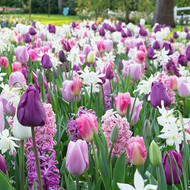
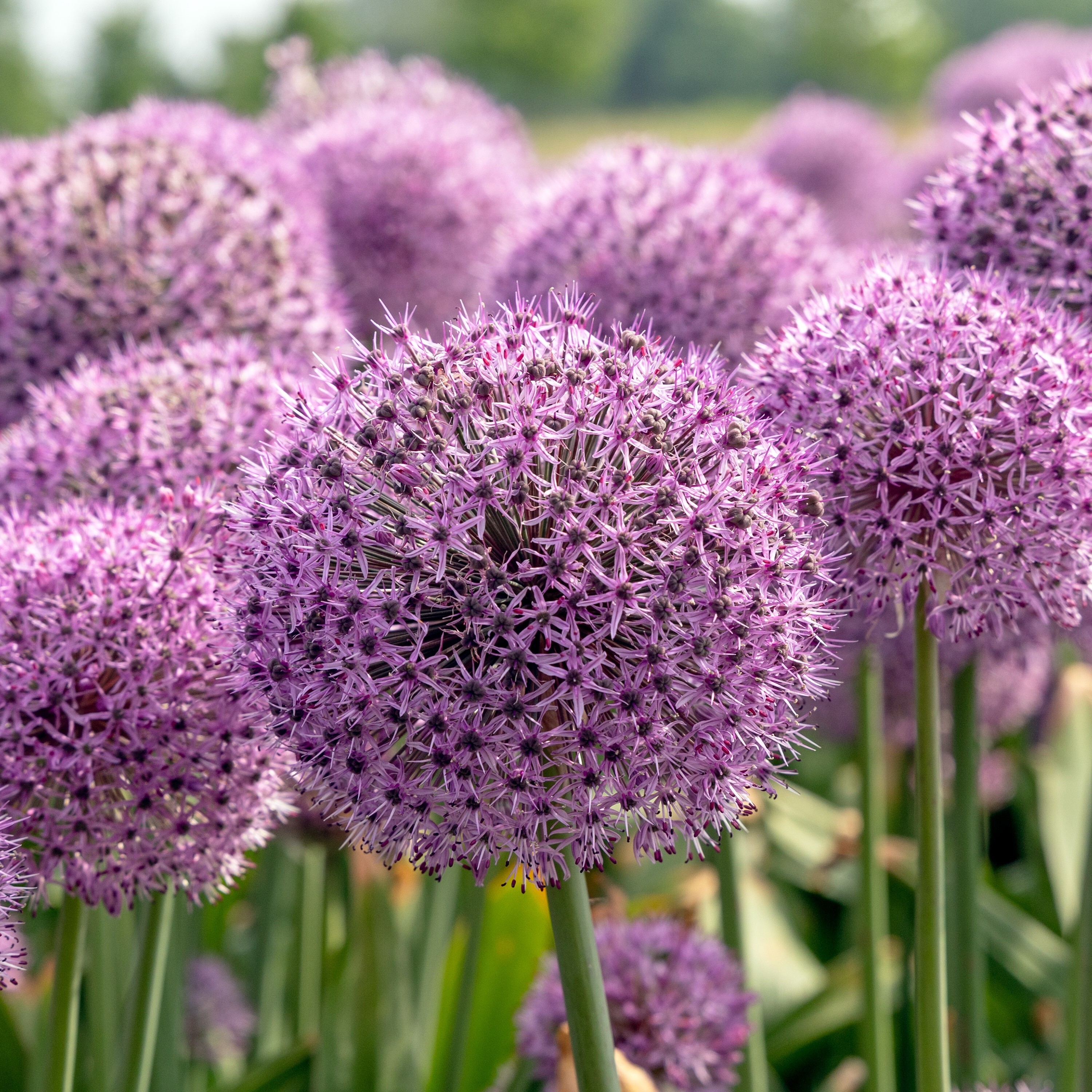
Alliums are among the most architectural of garden bulbs. Their tall stems and spherical flower heads provide a strong vertical element in late spring and early summer. They are particularly effective in sunny borders and look excellent growing through herbaceous perennials.
Plant alliums between September and November in free-draining soil and full sun.
How to plant alliums
Choose a sunny position with well-drained soil. Plant the bulbs deeply enough to provide good stability and follow the recommended depth for the individual variety.
Alliums generally prefer:
- Full sun
- Free-draining soil
- Reasonably fertile conditions
- Good air circulation
One characteristic of many alliums is that the foliage emerges before flowering and can begin to die back as the flower stem develops. For this reason, they are particularly effective when planted among perennials that grow up around them and hide the fading foliage.
What to plant with alliums
Alliums combine particularly well with:
- Geraniums
- Nepeta
- Salvia
- Grasses
- Peonies
- Roses
- Hardy geraniums
- Euphorbia
The combination of tall allium stems rising above lower foliage creates an attractive layered effect.
After flowering, the dried flower heads can also provide architectural interest. Deadhead after flowering while leaving the stem so the plant can return energy to the bulb; alternatively, some flower heads can be left for winter interest once the plants are well established.
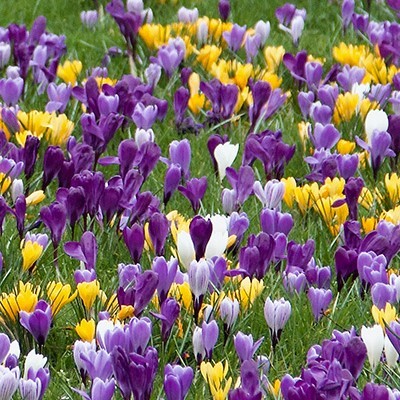
Crocus are among the earliest flowers of the year and are invaluable for bringing colour into the garden at the end of winter. They are small bulbs, so their greatest impact comes from planting generously. Rather than scattering just a handful around a large garden, plant crocus in groups or drifts.
Where to plant crocus
Crocus are versatile and can be used:
- In lawns
- Under deciduous trees
- Around shrubs
- At the front of borders
- In rockeries
- In containers
- Along paths
They are particularly effective in informal or naturalistic planting.
Planting crocus in lawns
For a natural appearance, plant bulbs in irregular groups rather than in rows.Toss a handful of bulbs across the lawn and plant them where they land, creating a more natural distribution. Allow the foliage to remain after flowering so the bulbs can replenish their energy for the following year.
Crocus combinations
Crocus can be combined with later-flowering bulbs such as:
Crocus + narcissus + tulips
The crocus provides the first splash of colour, followed by narcissus and finally tulips.
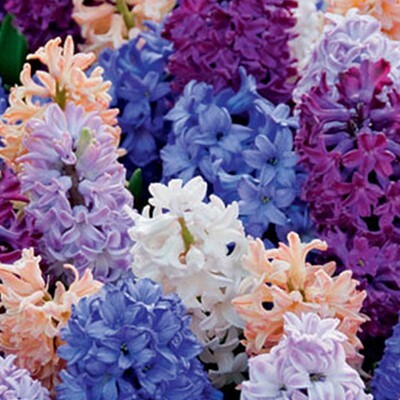
Hyacinths are prized for their powerful fragrance, making them particularly valuable near entrances, paths, seating areas and patios where their scent can be appreciated. They also produce dense spikes of flowers in a wide range of colours.
Where to plant hyacinths
Hyacinths are excellent for:
- Formal borders
- Cottage gardens
- Containers
- Patio pots
- Window areas
- Paths and entrances
Because of their fragrance, consider planting them where people regularly pass.
Combining hyacinths
Hyacinths work well with early narcissus and tulips. For example: White hyacinths + pale yellow narcissus + soft pink tulips creates a softer spring display.
Alternatively, strong blue, purple or pink hyacinths can be used to create a more dramatic colour scheme.
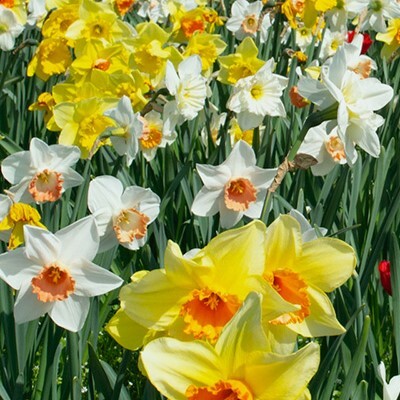
Narcissus are among the most dependable spring bulbs for UK gardens. The group includes traditional daffodils as well as smaller narcissus, jonquils, poeticus types and many unusual cultivars. Their versatility is one of their greatest strengths.
They can be planted:
- In borders
- In lawns
- Under deciduous trees
- Among shrubs
- In woodland-style planting
- In containers
- In formal groups
- In naturalistic drifts
Why grow narcissus?
Narcissus are:
- Reliable
- Long-lived
- Generally easy to grow
- Suitable for many garden styles
- Available in many sizes and forms
- Excellent for naturalising
They also provide an important early-season source of nectar for pollinating insects.
Naturalising narcissus
For a naturalistic effect, plant narcissus in informal groups beneath deciduous trees or through grass. Allow the foliage to die back naturally after flowering. The leaves are essential because they photosynthesise and replenish the bulb for future flowering. Avoid tying or braiding the foliage after flowering, as this can restrict the leaves' ability to capture light.

Tulips provide perhaps the greatest range of colours, shapes and forms of all the major spring bulbs.
There are tulips suitable for:
- Formal borders
- Cottage gardens
- Containers
- Cutting gardens
- Naturalistic planting
- Small gardens
- Large-scale displays
Tulips are generally planted later than many other spring bulbs. October, November and even December are the perfect months for planting, as this is late enough that newly emerging foliage will avoid being damaged by spring frosts.
Choosing tulips
Consider:
Height
Short tulips work well at the front of borders and in containers, while tall varieties create strong vertical accents.
Flowering time
Early, mid-season and late tulips can be combined to extend the display.
Flower shape
Choose from simple cups, doubles, lily-flowered forms, fringed flowers, parrot types and many others.
Colour
Tulips range from pure white and soft pastels to vivid reds, oranges, yellows, pinks and deep purples.
Combining tulips
For a sophisticated display, restrict the colour palette to two or three complementary shades.
For example:
- White + purple
- Pink + white
- Orange + purple
- Red + cream
- Soft pink + apricot
Alternatively, use a mixture of closely related shades for a more relaxed cottage-garden effect.