
<p>Living by the coast, or on any exposed, windswept plot, means choosing hedging that can cope with salt-laden gales rather than just tolerating a gentle breeze. Our coastal hedging range has been chosen specifically for plants that shrug off strong winds, salt spray and thin, free-draining soils, making them just as useful inland on cold, exposed hillsides as they are along the shore. Planted as a hedge, they'll knock the worst of the wind back, give birds and small mammals somewhere to shelter, and build you a hardy, private boundary that only gets tougher with age.</p>
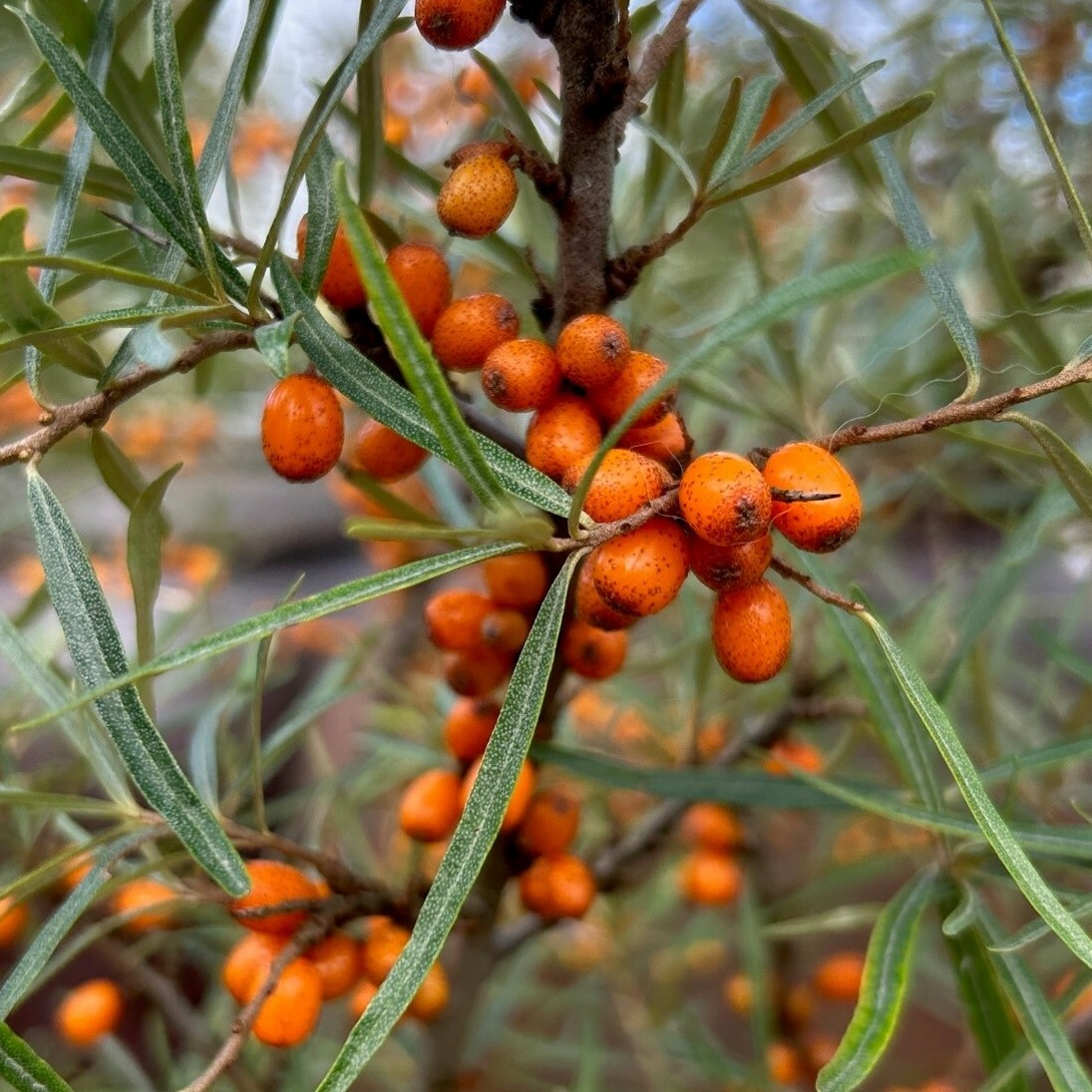
<p>Some of these varieties, like Sea Buckthorn (Hippophae rhamnoides), are naturally suited to light, sandy ground and are often seen colonising dunes in the wild. Others, such as Rosa rugosa and Hawthorn (Crataegus monogyna), are simply tough all-rounders that will take root in almost any soil, coastal or not.</p>
<p>**A note on plant size:** alongside the height of each plant, we list its age, since the two don't always go hand in hand. Plants marked "1/1" are two years old, and where available, "1/2" marks older, three-year-old stock. It's easy to find plants online that match our heights but have been raised from seed in a single season — ours are grown on for longer to build a stronger root system, so they establish faster and give your new hedge a proper start. You may find cheaper elsewhere, but not better.</p>
<p>FAQs</p>
<p><strong>1. What makes a hedging plant suitable for coastal or exposed sites?</strong><br />Coastal hedging plants need to withstand salt spray, strong prevailing winds and often thin, sandy or free-draining soil. Varieties like Sea Buckthorn, Rosa rugosa and Hawthorn have naturally tough leaves and root systems that let them keep growing where less hardy plants would scorch or fail.</p>
<p><strong>2. Do coastal hedging plants only suit seaside gardens?</strong><br />No. While they're bred to handle salt spray, these plants are equally at home on any cold, windy or exposed site inland, such as hilltop gardens or open countryside, where they work well as a windbreak hedge.</p>
<p><strong>3. Which plants in this range prefer sandy soil, and which will grow almost anywhere?</strong><br />Sea Buckthorn (Hippophae rhamnoides) naturally prefers light, well-drained, sandy soil, similar to its native dune habitat. Rosa rugosa and Hawthorn (Crataegus monogyna), on the other hand, are far more adaptable and will establish in most soil types, coastal or otherwise.</p>
<p><strong>4. What does the "1/1" and "1/2" size marking mean?</strong><br />These markings indicate the plant's age rather than just its height. "1/1" means the plant is two years old, while "1/2" (offered for some varieties) means it's three years old. Older plants of the same height as younger ones typically have a stronger, more established root system.</p>
<p><strong>5. Why does plant age matter as much as plant height?</strong><br />Two plants can be the same height but very different ages — a taller, younger plant raised quickly from seed may have a weaker root system than an older plant of the same size. A well-developed root system helps a hedge establish faster and cope better with the stresses of an exposed site.</p>
<p><strong>6. Are these hedging plants evergreen or deciduous?</strong><br />Most of the coastal range is deciduous, losing their leaves over winter, with one semi-evergreen option also available. You can filter the range by type to find the right fit for your hedge.</p>
<p><strong>7. Which species are included in the coastal hedging range?</strong><br />The range currently includes Cornus sanguinea, Cotoneaster simonsii, Crataegus monogyna (Hawthorn), Euonymus europaeus (Spindleberry), Hippophae rhamnoides (Sea Buckthorn), Prunus cerasifera (Cherry Plum), Rosa rugosa, Rosa rugosa alba, and Sambucus nigra (Elderberry).</p>
<p><strong>8. Can coastal hedging plants also support wildlife?</strong><br />Yes. As well as blocking wind and screening a boundary, these hedges provide shelter, nesting sites and, in the case of species like Hawthorn, Elderberry and Sea Buckthorn, berries that are a valuable food source for birds and other wildlife.</p>
<p>json { "@context": "https://schema.org", "@type": "FAQPage", "mainEntity": [ { "@type": "Question", "name": "What makes a hedging plant suitable for coastal or exposed sites?", "acceptedAnswer": { "@type": "Answer", "text": "Coastal hedging plants need to withstand salt spray, strong prevailing winds and often thin, sandy or free-draining soil. Varieties like Sea Buckthorn, Rosa rugosa and Hawthorn have naturally tough leaves and root systems that let them keep growing where less hardy plants would scorch or fail." } }, { "@type": "Question", "name": "Do coastal hedging plants only suit seaside gardens?", "acceptedAnswer": { "@type": "Answer", "text": "No. While they're bred to handle salt spray, these plants are equally at home on any cold, windy or exposed site inland, such as hilltop gardens or open countryside, where they work well as a windbreak hedge." } }, { "@type": "Question", "name": "Which plants in this range prefer sandy soil, and which will grow almost anywhere?", "acceptedAnswer": { "@type": "Answer", "text": "Sea Buckthorn (Hippophae rhamnoides) naturally prefers light, well-drained, sandy soil, similar to its native dune habitat. Rosa rugosa and Hawthorn (Crataegus monogyna), on the other hand, are far more adaptable and will establish in most soil types, coastal or otherwise." } }, { "@type": "Question", "name": "What does the \"1/1\" and \"1/2\" size marking mean?", "acceptedAnswer": { "@type": "Answer", "text": "These markings indicate the plant's age rather than just its height. \"1/1\" means the plant is two years old, while \"1/2\" (offered for some varieties) means it's three years old. Older plants of the same height as younger ones typically have a stronger, more established root system." } }, { "@type": "Question", "name": "Why does plant age matter as much as plant height?", "acceptedAnswer": { "@type": "Answer", "text": "Two plants can be the same height but very different ages — a taller, younger plant raised quickly from seed may have a weaker root system than an older plant of the same size. A well-developed root system helps a hedge establish faster and cope better with the stresses of an exposed site." } }, { "@type": "Question", "name": "Are these hedging plants evergreen or deciduous?", "acceptedAnswer": { "@type": "Answer", "text": "Most of the coastal range is deciduous, losing their leaves over winter, with one semi-evergreen option also available. You can filter the range by type to find the right fit for your hedge." } }, { "@type": "Question", "name": "Which species are included in the coastal hedging range?", "acceptedAnswer": { "@type": "Answer", "text": "The range currently includes Cornus sanguinea, Cotoneaster simonsii, Crataegus monogyna (Hawthorn), Euonymus europaeus (Spindleberry), Hippophae rhamnoides (Sea Buckthorn), Prunus cerasifera (Cherry Plum), Rosa rugosa, Rosa rugosa alba, and Sambucus nigra (Elderberry)." } }, { "@type": "Question", "name": "Can coastal hedging plants also support wildlife?", "acceptedAnswer": { "@type": "Answer", "text": "Yes. As well as blocking wind and screening a boundary, these hedges provide shelter, nesting sites and, in the case of species like Hawthorn, Elderberry and Sea Buckthorn, berries that are a valuable food source for birds and other wildlife." } } ] }</p>

Coastal hedging plants
Living by the coast, or on any exposed, windswept plot, means choosing hedging that can cope with salt-laden gales rather than just tolerating a gentle breeze. Our coastal hedging range has been chosen specifically for plants that shrug off strong winds, salt spray and thin, free-draining soils, making them just as useful inland on cold, exposed hillsides as they are along the shore. Planted as a hedge, they'll knock the worst of the wind back, give birds and small mammals somewhere to shelter, and build you a hardy, private boundary that only gets tougher with age.
Some of these varieties, like Sea Buckthorn (Hippophae rhamnoides), are naturally suited to light, sandy ground and are often seen colonising dunes in the wild. Others, such as Rosa rugosa and Hawthorn (Crataegus monogyna), are simply tough all-rounders that will take root in almost any soil, coastal or not.
**A note on plant size:** alongside the height of each plant, we list its age, since the two don't always go hand in hand. Plants marked "1/1" are two years old, and where available, "1/2" marks older, three-year-old stock. It's easy to find plants online that match our heights but have been raised from seed in a single season — ours are grown on for longer to build a stronger root system, so they establish faster and give your new hedge a proper start. You may find cheaper elsewhere, but not better.
FAQs
1. What makes a hedging plant suitable for coastal or exposed sites?
Coastal hedging plants need to withstand salt spray, strong prevailing winds and often thin, sandy or free-draining soil. Varieties like Sea Buckthorn, Rosa rugosa and Hawthorn have naturally tough leaves and root systems that let them keep growing where less hardy plants would scorch or fail.
2. Do coastal hedging plants only suit seaside gardens?
No. While they're bred to handle salt spray, these plants are equally at home on any cold, windy or exposed site inland, such as hilltop gardens or open countryside, where they work well as a windbreak hedge.
3. Which plants in this range prefer sandy soil, and which will grow almost anywhere?
Sea Buckthorn (Hippophae rhamnoides) naturally prefers light, well-drained, sandy soil, similar to its native dune habitat. Rosa rugosa and Hawthorn (Crataegus monogyna), on the other hand, are far more adaptable and will establish in most soil types, coastal or otherwise.
4. What does the "1/1" and "1/2" size marking mean?
These markings indicate the plant's age rather than just its height. "1/1" means the plant is two years old, while "1/2" (offered for some varieties) means it's three years old. Older plants of the same height as younger ones typically have a stronger, more established root system.
5. Why does plant age matter as much as plant height?
Two plants can be the same height but very different ages — a taller, younger plant raised quickly from seed may have a weaker root system than an older plant of the same size. A well-developed root system helps a hedge establish faster and cope better with the stresses of an exposed site.
6. Are these hedging plants evergreen or deciduous?
Most of the coastal range is deciduous, losing their leaves over winter, with one semi-evergreen option also available. You can filter the range by type to find the right fit for your hedge.
7. Which species are included in the coastal hedging range?
The range currently includes Cornus sanguinea, Cotoneaster simonsii, Crataegus monogyna (Hawthorn), Euonymus europaeus (Spindleberry), Hippophae rhamnoides (Sea Buckthorn), Prunus cerasifera (Cherry Plum), Rosa rugosa, Rosa rugosa alba, and Sambucus nigra (Elderberry).
8. Can coastal hedging plants also support wildlife?
Yes. As well as blocking wind and screening a boundary, these hedges provide shelter, nesting sites and, in the case of species like Hawthorn, Elderberry and Sea Buckthorn, berries that are a valuable food source for birds and other wildlife.
json { "@context": "https://schema.org", "@type": "FAQPage", "mainEntity": [ { "@type": "Question", "name": "What makes a hedging plant suitable for coastal or exposed sites?", "acceptedAnswer": { "@type": "Answer", "text": "Coastal hedging plants need to withstand salt spray, strong prevailing winds and often thin, sandy or free-draining soil. Varieties like Sea Buckthorn, Rosa rugosa and Hawthorn have naturally tough leaves and root systems that let them keep growing where less hardy plants would scorch or fail." } }, { "@type": "Question", "name": "Do coastal hedging plants only suit seaside gardens?", "acceptedAnswer": { "@type": "Answer", "text": "No. While they're bred to handle salt spray, these plants are equally at home on any cold, windy or exposed site inland, such as hilltop gardens or open countryside, where they work well as a windbreak hedge." } }, { "@type": "Question", "name": "Which plants in this range prefer sandy soil, and which will grow almost anywhere?", "acceptedAnswer": { "@type": "Answer", "text": "Sea Buckthorn (Hippophae rhamnoides) naturally prefers light, well-drained, sandy soil, similar to its native dune habitat. Rosa rugosa and Hawthorn (Crataegus monogyna), on the other hand, are far more adaptable and will establish in most soil types, coastal or otherwise." } }, { "@type": "Question", "name": "What does the \"1/1\" and \"1/2\" size marking mean?", "acceptedAnswer": { "@type": "Answer", "text": "These markings indicate the plant's age rather than just its height. \"1/1\" means the plant is two years old, while \"1/2\" (offered for some varieties) means it's three years old. Older plants of the same height as younger ones typically have a stronger, more established root system." } }, { "@type": "Question", "name": "Why does plant age matter as much as plant height?", "acceptedAnswer": { "@type": "Answer", "text": "Two plants can be the same height but very different ages — a taller, younger plant raised quickly from seed may have a weaker root system than an older plant of the same size. A well-developed root system helps a hedge establish faster and cope better with the stresses of an exposed site." } }, { "@type": "Question", "name": "Are these hedging plants evergreen or deciduous?", "acceptedAnswer": { "@type": "Answer", "text": "Most of the coastal range is deciduous, losing their leaves over winter, with one semi-evergreen option also available. You can filter the range by type to find the right fit for your hedge." } }, { "@type": "Question", "name": "Which species are included in the coastal hedging range?", "acceptedAnswer": { "@type": "Answer", "text": "The range currently includes Cornus sanguinea, Cotoneaster simonsii, Crataegus monogyna (Hawthorn), Euonymus europaeus (Spindleberry), Hippophae rhamnoides (Sea Buckthorn), Prunus cerasifera (Cherry Plum), Rosa rugosa, Rosa rugosa alba, and Sambucus nigra (Elderberry)." } }, { "@type": "Question", "name": "Can coastal hedging plants also support wildlife?", "acceptedAnswer": { "@type": "Answer", "text": "Yes. As well as blocking wind and screening a boundary, these hedges provide shelter, nesting sites and, in the case of species like Hawthorn, Elderberry and Sea Buckthorn, berries that are a valuable food source for birds and other wildlife." } } ] }