
Even well-grown roses occasionally encounter problems. In the final practical section of this guide, we'll explain how to identify black spot, powdery mildew, rust, aphids, sawfly, rose dieback and other common issues, along with practical steps to prevent problems before they affect your plants. This section focuses on good garden hygiene and healthy growing practices to help your roses thrive year after year.
Pests, Diseases & Common Problems
Healthy roses are naturally more resilient than stressed plants, but even the best-grown specimens can occasionally encounter pests, diseases or environmental problems. Fortunately, most issues can be managed successfully if they're recognised early and dealt with promptly.
The key is not to expect perfect foliage throughout the growing season, but to understand what is normal, what requires action and, most importantly, how good cultivation can prevent many problems before they begin.
At RV Roger Ltd, we believe prevention is always better than cure. Choosing healthy, disease-resistant varieties, planting in the right position and maintaining good growing conditions will reduce the likelihood of serious problems far more effectively than relying on chemical treatments.
The foundations of healthy roses
Many common rose problems have the same underlying causes:
- Poor air circulation.
- Prolonged damp foliage.
- Overcrowded planting.
- Nutrient deficiencies.
- Drought stress.
- Weak or neglected plants.
By planting roses correctly, pruning them annually and maintaining healthy soil, you'll significantly reduce the risk of many pests and diseases.
Healthy roses are simply better equipped to withstand challenges.
Black Spot
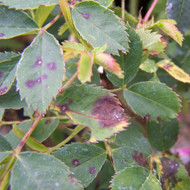
Black spot is one of the best-known diseases affecting roses in the UK. It appears as dark, irregular black or purple spots on the leaves, often surrounded by yellowing tissue. As the disease progresses, affected leaves may fall prematurely, leaving the plant weakened.
What causes black spot?
Black spot is a fungal disease that thrives in warm, damp conditions, particularly where foliage remains wet for long periods. Spores spread by rain splash and overwinter on infected leaves and stems.
How to reduce the risk
- Plant roses with good spacing.
- Prune regularly to improve airflow.
- Water the soil rather than the leaves.
- Remove infected leaves promptly.
- Clear fallen leaves during autumn.
Choosing modern varieties with good disease resistance can also make a significant difference.
Powdery Mildew
Powdery mildew appears as a white or grey powdery coating on young leaves, shoots and flower buds. Affected growth may become distorted, and flowering can be reduced. Unlike many fungal diseases, powdery mildew often develops during warm, dry weather when plants are under stress.
Prevention
- Avoid allowing plants to become excessively dry.
- Maintain consistent soil moisture.
- Improve air circulation.
- Avoid excessive nitrogen fertiliser.
Healthy, evenly growing plants are much less susceptible.
Rose Rust
Rose rust produces bright orange or rusty-coloured pustules, usually on the underside of leaves. Severely affected foliage may yellow and drop prematurely. As with black spot, removing infected material and improving airflow are the most effective long-term management strategies.
Rose Dieback
Occasionally, individual stems begin dying back from the tip. This may occur after pruning, winter damage or physical injury.
Causes include:
- Frost damage.
- Poor pruning cuts.
- Mechanical injury.
- Disease entering through damaged tissue.
Prune affected stems back to healthy green wood, making clean cuts with sterilised secateurs.
Rose Replant Disease
One problem that surprises many gardeners is rose replant disease. If a new rose is planted exactly where an older rose has recently been removed, it may struggle to establish despite good care. Growth is often poor, with reduced vigour and smaller flowers.
Although the exact causes are still being researched, changes in soil biology are believed to play an important role.
The best solution
Where possible:
- Choose a different planting position.
Or
- Replace as much of the old soil as practical before replanting.
Adding fresh organic matter also helps improve conditions.
Aphids
Aphids are among the most familiar rose pests. These small green, black or pink insects gather around soft young shoots and flower buds, feeding on plant sap. Although alarming in large numbers, healthy roses usually tolerate modest infestations without lasting damage.
Encourage natural predators
Ladybirds, hoverflies, lacewings and many garden birds feed on aphids.
Supporting wildlife in the garden often provides excellent natural control. Strong jets of water can also remove many aphids without using insecticides.
Rose Sawfly
Rose sawfly larvae resemble small caterpillars and feed on the leaves, sometimes leaving only the veins behind. Light damage is usually cosmetic, but heavier infestations can weaken young plants.
Inspect plants regularly during spring and early summer, removing larvae by hand where practical.
Thrips
Thrips are tiny insects that feed within flower buds and blooms.
They may cause:
- Brown petal edges.
- Distorted flowers.
- Poor bud opening.
Good garden hygiene and encouraging beneficial insects help maintain natural balance.
Leaf Rollers
Leaf-rolling caterpillars occasionally fold rose leaves around themselves for protection while feeding. Although damage is generally localised, affected leaves can simply be removed and disposed of.
Japanese Beetle
The Japanese beetle has caused significant damage to roses in parts of North America and mainland Europe. It is not established in the UK, but it remains subject to official monitoring because of the potential threat it poses to ornamental and fruit crops. Gardeners should remain aware of current guidance from plant health authorities, particularly when travelling or importing plants.
Why aren't my roses flowering?
Poor flowering is often caused by cultural conditions rather than disease.
Common reasons include:
- Too much shade.
- Insufficient feeding.
- Incorrect pruning.
- Young plants still establishing.
- Drought stress.
- Lack of deadheading on repeat-flowering varieties.
Most roses become more floriferous as they mature.
Yellow leaves
Yellowing foliage isn't always a sign of disease.
Possible causes include:
- Seasonal ageing.
- Waterlogging.
- Drought.
- Nutrient deficiency.
- Temporary transplant stress.
Check soil moisture before assuming fertiliser is required.
Blind Shoots
Occasionally a healthy-looking shoot develops without producing a flower bud.
These are known as blind shoots.
They often result from:
- Sudden weather changes.
- Temporary environmental stress.
- Rapid spring growth.
Lightly pruning back to a healthy outward-facing bud often encourages a flowering replacement shoot.
Winter damage
After particularly cold winters, some stems may appear blackened or fail to produce new growth. Wait until spring growth begins before deciding which stems require removal. Healthy green wood beneath the bark usually indicates the stem remains alive.
Should I spray my roses?
Many modern rose varieties have been bred with greatly improved disease resistance. Combined with good cultivation, regular pruning and healthy soil, this often means routine spraying is unnecessary in many gardens. Where problems do arise, always identify the cause before considering treatment.
Good gardening practices should remain the first line of defence.
Common Rose Problems at a Glance
|
Symptom |
Likely Cause |
Recommended Action |
|
Black spots on leaves |
Black spot |
Remove infected foliage, improve airflow and clear fallen leaves. |
|
White powder on leaves |
Powdery mildew |
Improve air circulation and avoid drought stress. |
|
Orange pustules |
Rose rust |
Remove affected leaves and improve ventilation. |
|
Sticky young shoots |
Aphids |
Encourage natural predators or wash off with water. |
|
Leaves eaten |
Sawfly larvae |
Remove larvae by hand where practical. |
|
Yellow leaves |
Water, drainage or nutrition |
Check soil moisture and improve growing conditions. |
|
Few flowers |
Shade, poor pruning or lack of feeding |
Review growing conditions and seasonal care. |
|
Dieback |
Frost, damage or disease |
Prune back to healthy wood. |
Keeping Roses Healthy Naturally
The healthiest roses usually come from good gardening rather than constant intervention.
Simple habits make the biggest difference:
- Choose disease-resistant varieties where possible.
- Plant in full sun with good air circulation.
- Improve the soil before planting.
- Water deeply during prolonged dry periods.
- Feed each spring.
- Mulch annually.
- Prune regularly.
- Remove diseased leaves promptly.
- Encourage birds, bees and beneficial insects.
Healthy gardens develop their own natural balance over time.
The RV Roger Approach
Every rose will occasionally lose a leaf, attract an aphid or suffer a little weather damage. That's part of gardening and rarely a cause for concern.
Rather than aiming for perfection, we encourage gardeners to focus on creating the right growing conditions. Healthy soil, correct planting, thoughtful pruning and good garden hygiene will prevent far more problems than any routine spray programme.
If you notice something unusual, don't panic. Many problems are temporary and can be resolved with simple cultural practices. And if you're unsure what you're looking at, we're always happy to help identify the issue and suggest the most appropriate course of action.