
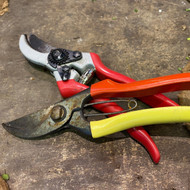
Pruning is often the part of rose growing that gardeners worry about most, yet it's also one of the most rewarding. In the next section, we'll explain why roses need pruning, when different types should be pruned, how to deadhead, and the techniques that encourage healthy growth, beautiful flowers and long-lived plants.
Pruning Roses – When, Why and How
Ask ten gardeners what worries them most about growing roses and many will give the same answer: pruning.
It's easy to understand why. Cutting healthy stems from a cherished plant can feel counterintuitive, and many people worry they'll remove next year's flowers or damage the rose.
The good news is that roses are remarkably forgiving. They have evolved to produce vigorous new growth and respond well to thoughtful pruning. In fact, regular pruning is one of the best ways to keep a rose healthy, encourage repeat flowering and maintain an attractive shape.
Rather than thinking of pruning as cutting a plant back, think of it as guiding its growth. Every cut has a purpose—whether it's removing old wood, encouraging new flowering shoots or improving air circulation through the centre of the plant.
The exact method depends on the type of rose you're growing, but the principles remain the same.
Why do roses need pruning?
Pruning isn't simply about keeping roses tidy. It plays a vital role in their long-term health and performance.
Regular pruning helps to:
- Encourage vigorous new flowering shoots.
- Remove dead, damaged and diseased wood.
- Improve air circulation through the plant.
- Reduce the risk of fungal diseases.
- Maintain a balanced, attractive shape.
- Prevent plants becoming woody and unproductive.
- Produce larger, better-quality flowers.
Left unpruned, many roses gradually become congested, producing fewer flowers and becoming increasingly difficult to manage.
When should roses be pruned?
The timing depends on the type of rose, but for most garden roses, the main pruning takes place in late winter or early spring, just as new growth begins. In most parts of the UK, this is usually between late February and early April. Waiting until the worst winter weather has passed reduces the risk of frost damage to newly cut stems, while swelling buds make it easier to see where healthy new growth is developing.
Dead, damaged or diseased stems can be removed whenever they are noticed.
Before you start
Good pruning begins with the right tools.
Use:
- Sharp bypass secateurs for most cuts.
- Loppers for thicker stems.
- A pruning saw for old, woody branches.
- Strong gardening gloves.
- Eye protection when tackling vigorous climbers or ramblers.
Always clean your tools before moving between plants, particularly if disease is present. A clean, sharp cut heals more quickly than one made with blunt tools.
The basic principles of rose pruning
Although different rose groups are pruned in different ways, the fundamentals remain remarkably consistent.
When pruning:
- Remove all dead, damaged and diseased stems first.
- Cut out weak or spindly growth.
- Remove stems that cross and rub together.
- Aim to create an open framework that allows light and air into the centre of the plant.
- Cut just above a healthy outward-facing bud.
- Make clean cuts at a slight angle so water runs away from the bud.
The goal is a balanced framework of strong stems that can support healthy flowering growth throughout the season.
Pruning Hybrid Tea Roses
Hybrid Tea roses are grown for their large, elegant flowers and respond well to relatively hard annual pruning.
In late winter or early spring:
- Remove dead or damaged stems.
- Cut out any thin, weak growth.
- Retain four to six strong, healthy stems where possible.
- Shorten these stems to around 20–30cm above ground level, cutting just above an outward-facing bud.
This encourages vigorous new shoots capable of producing large, high-quality blooms.
During summer, regularly remove spent flowers by cutting back to the first healthy leaf with five leaflets. This process, known as deadheading, encourages repeat flowering.
Pruning Floribunda Roses
Floribundas produce clusters of flowers over a long season and generally require a lighter approach than Hybrid Teas.
In spring:
- Remove dead or damaged wood.
- Thin congested stems.
- Shorten the remaining stems by around one-third to one-half.
This encourages plenty of flowering shoots while maintaining the rounded shape that Floribundas are known for.
Deadhead regularly throughout summer to prolong flowering.
Pruning Shrub Roses
Shrub roses often require surprisingly little pruning. Rather than cutting them back hard each year, the emphasis is on maintaining a healthy, balanced framework.
Each spring:
- Remove dead or damaged wood.
- Thin older stems where necessary.
- Shorten vigorous shoots lightly to maintain shape.
- Remove any stems that spoil the natural habit of the plant.
Many modern shrub roses flower best when allowed to develop into graceful, naturally shaped bushes.
Avoid over-pruning unless renovation is required.
Pruning Climbing Roses
Climbing roses are often misunderstood. Unlike shrubs, their main framework should remain in place for many years.
Each winter or early spring:
- Tie new long stems horizontally wherever possible.
- Remove dead or damaged wood.
- Shorten flowering side shoots back to two or three buds.
- Replace old framework stems gradually as new ones develop.
Training stems horizontally encourages more flowering shoots to develop along their length, producing a much better display than allowing stems to grow vertically.
Pruning Rambling Roses
Most rambling roses flower once each summer on stems produced the previous year. This means timing is important.
Prune immediately after flowering:
- Remove some of the oldest stems completely.
- Tie in strong new replacement shoots.
- Avoid removing all young growth, as this will carry next year's flowers.
This simple rotation keeps ramblers vigorous while ensuring reliable flowering each summer.
Pruning Patio and Ground Cover Roses
These compact roses require minimal maintenance.
Each spring:
- Remove dead or damaged growth.
- Lightly trim to maintain shape.
- Thin congested growth where necessary.
Older plants can occasionally be rejuvenated with a harder prune if they become woody.
What is deadheading?
Deadheading is the removal of spent flowers before they begin producing seed. For repeat-flowering roses, this encourages the plant to continue producing new blooms instead of diverting energy into forming rose hips. Cut back to the first healthy outward-facing leaf below the faded flower.
Towards the end of autumn, many gardeners stop deadheading to allow decorative rose hips to develop, particularly on shrub and species roses where they provide winter interest and food for birds.
What are suckers?
Occasionally, vigorous shoots emerge from below the graft union. These are known as suckers and originate from the rootstock rather than the named rose variety.
Suckers are usually:
- More vigorous than the rest of the plant.
- Different in leaf shape or colour.
- Fast-growing and upright.
They should be removed as close as possible to their point of origin, ideally by tracing them back below soil level. Allowing suckers to develop can weaken the grafted variety over time.
Can old roses be renovated?
Yes. An older rose that has become overgrown, congested or neglected can often be rejuvenated. Rather than cutting everything back in one year, remove one or two of the oldest stems each spring while encouraging younger replacement shoots. This gradual renewal helps restore vigour without shocking the plant.
Even very old roses often respond remarkably well to careful renovation.
Common Pruning Mistakes
Fortunately, most pruning mistakes are easy to avoid.
Pruning too early
Early winter pruning may encourage tender growth that can be damaged by frost. Wait until late winter or early spring for most roses.
Leaving dead wood
Dead stems provide an entry point for disease. Remove them as soon as they're noticed.
Cutting too close to a bud
This can damage the developing shoot. Leave a small amount of stem above the bud.
Ignoring climbing rose training
Allowing climbing roses to grow straight upwards often results in flowers only at the top of the plant. Training stems horizontally dramatically improves flowering.
Being afraid to prune
Perhaps the biggest mistake of all. Most roses are tougher than gardeners think and respond positively to regular maintenance.
The RV Roger Approach
There's no need to be intimidated by pruning. Roses are naturally vigorous plants, and thoughtful pruning helps them perform at their best rather than restricting them.
Start with the basics: remove anything dead, damaged or diseased, improve the shape by opening the centre of the plant, and then prune according to the type of rose you're growing. With a little practice, pruning quickly becomes one of the most satisfying jobs in the gardening calendar.
Remember that every garden is different. Growth will vary depending on soil, weather and the variety you've chosen, so use these guidelines as a framework rather than a rigid set of rules. Observe how your roses respond each year and you'll soon develop the confidence to prune them with ease.