
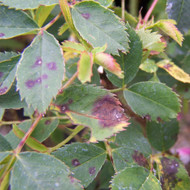
How do I deal with aphids (greenfly) on roses? Small numbers can often be squashed by hand or washed off with a jet of water. Encouraging natural predators such as ladybirds, hoverflies and birds by planting nectar-rich companion plants and avoiding unnecessary spraying is usually the best long-term approach, since chemical sprays also kill the beneficial insects that keep aphid numbers down naturally. What causes black spot on roses, and how do I treat it? Black spot is a fungal disease that thrives in damp, humid conditions and shows as dark blotches on leaves, which then yellow and drop. Remove and dispose of affected leaves (don't compost them), water at the base of the plant rather than over the foliage, improve air flow by avoiding overcrowding, and choose disease-resistant varieties where black spot is a persistent problem in your garden. My rose has a white powdery coating on the leaves — what is it? This is almost certainly powdery mildew, a fungal disease encouraged by dry roots combined with humid air, and often worse on young, soft growth. It rarely kills a rose but can distort foliage and weaken vigour. Keep the rose well watered at the roots, improve air circulation with light pruning, and remove badly affected leaves and debris from the ground. Why are my rose's leaves turning yellow and dropping off? The most common causes are lack of water, lack of nutrients, or both — particularly in the first couple of years after planting. Check the soil moisture and feeding regime first. If leaves are also showing spots or a powdery coating, disease is the more likely cause; otherwise, adjust watering and apply a balanced rose feed. My rose hasn't flowered since I planted it. Why? Some roses — including most true old roses (Gallicas, Damasks, Albas, Centifolias, Mosses), ramblers and species roses — flower on mature wood and simply won't bloom much, if at all, in their first year or two. Pruning too hard early on can also delay flowering in these types, so keep pruning light until the plant is established. For repeat-flowering modern shrub roses, poor flowering is more often linked to insufficient sun, feed or water. What are suckers, and how do I remove them? Modern rose rootstocks rarely produce suckers, unless severly provoked through stress or physical damage. New shoots on a rose can look dramatically different from old growth - sometimes with red leaves or many thorns, but are still the variety and not suckers. Assume it is normal growth until proved otherwsie. Suckers are shoots that grow from the rootstock below the graft union, rather than from the variety grafted onto it. If you are sure it is a sucker, trace it back to where it emerges from the root and pull it away firmly rather than cutting it, as cutting can encourage it to regrow more vigorously.