
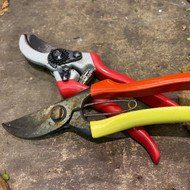
When should I prune my roses? Most repeat-flowering shrub, hybrid tea and floribunda roses are pruned in late winter to early spring (typically February to March in the UK), just as growth is beginning. Once-flowering shrub roses, most ramblers, and old roses that flower on the previous year's growth are pruned after flowering, in summer, so as not to remove the wood that would have flowered the following year. Should I deadhead my roses? It's important to remove all old flowers through the summer, to encourage repeat-flowering. Don't just pinch out the flower, but the stem back by 10cm or so to just above an outward-facing leaf. This stops plants from getting too 'leggy'. How hard should I cut back a shrub rose? For repeat-flowering shrub roses, cut back by around a third to a half each year, removing dead, damaged or crossing stems first, then shaping the remaining framework to an outward-facing bud. Once-flowering old roses and species roses should be pruned lightly, mainly to remove dead wood and control size, as hard pruning can significantly reduce flowering. Do climbing and rambling roses need different pruning? Yes. Climbers are generally pruned in late winter: shorten flowered side-shoots back to two or three buds and tie in new main stems horizontally to encourage more flowering shoots. Ramblers are usually pruned straight after flowering in summer, removing some of the older flowered stems at the base to make way for vigorous new growth. Do I need to prune a rose in its first year after planting? Only lightly. In the first year, focus on removing any dead, damaged or very weak growth, and lightly tip back stems to encourage branching, rather than hard pruning. This lets the plant put its energy into establishing a strong root system before more formative pruning in subsequent years. What tools do I need to prune roses safely? A pair of sharp, clean bypass secateurs will handle most pruning; loppers are useful for thicker or awkward stems, and a pruning saw for very old, woody growth. Thick, gauntlet-style gloves are strongly recommended given how sharp rose thorns are, and it's good practice to clean and sharpen blades between plants to avoid spreading disease.