
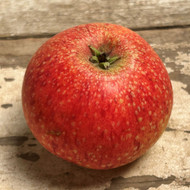
We grow around 230 varieties of apple in total, including cookers, cider varieties, dual purpose and dessert apples. Each one of these would be the 'best' choice for someone, depending on their particular needs whether that be disease-resistance, flavour, historical or local significance. We're not a museum, we don't just grow the obscure varieties to keep them going; everything we grow has some merit to it. So to narrow it down to just ten varieties is almost impossible - so consider this as a starting point for your journey into the world of growing apples.
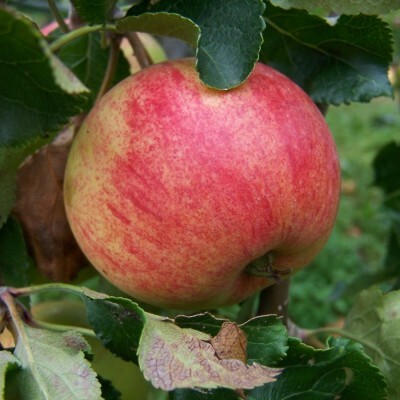
Bred by the Laxton Brothers in 1909, this is one of the few early season apples which have a crunch to them. Very, sweet and juicy, and ripening from the end of August, this is a wonderful eat-off-the-tree apple for late summer. Heavy cropping and excellent disease-resistance.
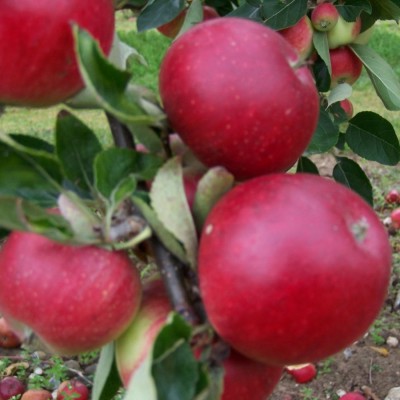
Also known as ‘Katya’, this was originally bred in Sweden in 1947, and is another excellent early season choice. Having Worcester Pearmain and James Grieve as its parents, the bright red fruit is sweet and full of juice, but it is much more disease resistant than either of them. The great advantage of this variety is that the fruit can be eaten fresh, or make a wonderful juice, and any excess (it crops very heavily) can be made into a first-rate cider.
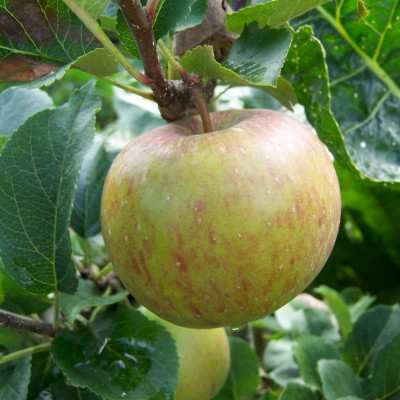
An old favourite, well known and widely offered by nurseries, for a very good reason - it’s one of the very best flavoured mid-season apples you can buy. Raised in 1907, its parents are also James Grieve and Worcester Pearmain, so it is no surprise that the taste is divine. Juicy, sweet and aromatic, but with a nice ‘bite’, this is the one to go for if you like a supermarket Braeburn, only much, much better. Compact in growth, frost resistant blossom and a heavy cropper, no wonder it has stood the test of time.
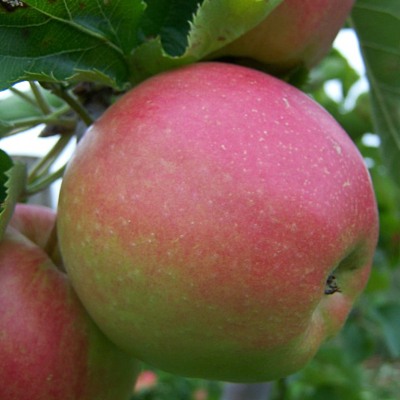
Developed in 1053 by Cornell University in New York State, this is a wonderful and much underplanted second early dessert apple. Having golden Delicious as one of its parents, the fruit is crisp and has plenty of sweetness, but there is still an underlying acidic bite. Jonagold has a reputation for being prone to scab, but here on the nursery in North Yorkshire the fruit is consistently clean, even in a wet summer. It is a triploid, so there need to be other apples within a quarter of a mile for good fruit set.
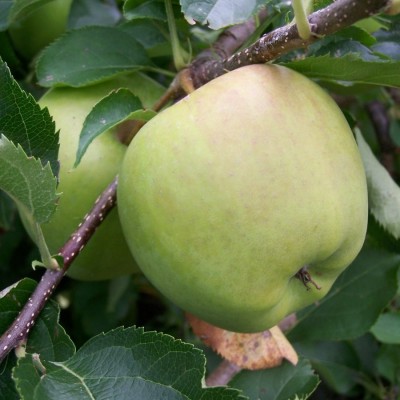
Introduced in 1949 and called ‘Mutsu’ in its native Japan, it was renamed as Crispin for the UK market in the 1960’s. This is an excellent choice if you like a Golden Delicious-type apple – crisp, bright green fruit with a lovely bite and some sharpness. It crops extremely heavily and is very disease-resistant. It also cooks very well, keeping some of its shape, and makes a lovely pie filling.
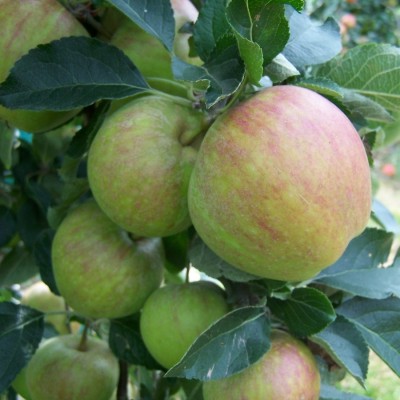
An excellent Cox-like apple, but one which is much easier to grow, especially for those in cold or wet locations. Bred in the 1960’s, the tall, handsome fruit have the tang and bite of a Cox’s Orange Pippin, but with plenty of juice. Regular to crop and the fruit are always clean and scab-free.
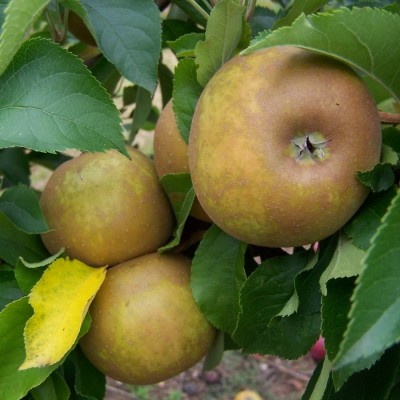
This old favourite had to be included, if nothing else to prove that it’s not just the newer varieties which are easy to grow. First recorded in 1872, these dull golden yellow fruits have a skin which is entirely covered in russeting, which makes it seem quite dry and coarse. The flesh however, is an absolute delight; rich and with a full ‘nutty’ flavour which none of the modern varieties come close to. It also makes possibly the nicest apple juice you have ever tasted. Compact in growth, so suitable for even a small garden.
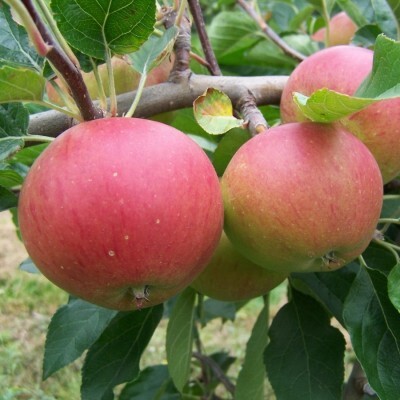
Probably the best Cox’s Orange Pippin alternative available. Whereas Cox’s can be hard to grow in northern gardens, Fiesta is as reliable as a Swiss watch, producing heavy crops of very high-quality fruit in all parts of the UK. Sweet in taste, but with a balanced acidity which gives it a richness and complexity which is hard to beat. Stores well.
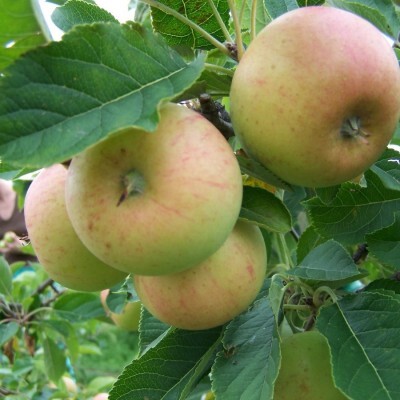
Another Cox’s substitute, with far-better disease resistance. Cropping is very heavy, which can lead to an abundance of smaller fruit, so it is important to thin the fruitlets in May. The flavour is excellent, aromatic, sweet and with a ‘bite’. Another advantage is that is fully self-fertile, so crops are guaranteed even with no other apple trees in the vicinity.
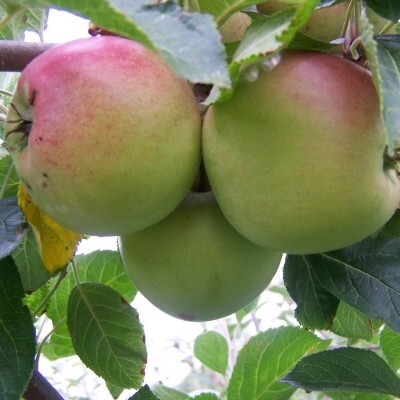
Bred in the 1930’s at the East Malling Research Station in Maidstone, this is a fine late season apple which looks as good as it tastes. A light yellow-green base which gradually develops a handsome dark red flush over almost the entirety of the fruit, with some light patches of russeting appearing on the exposed side of the fruit. Creamy yellow flesh which is firm, crisp and sweet and stores through until April.
Browse our full range of apple trees here - Apple Trees for Sale | Heritage & Dessert Apples | RV Roger